Part 3 of 5
The overseas vote
has already moved seats
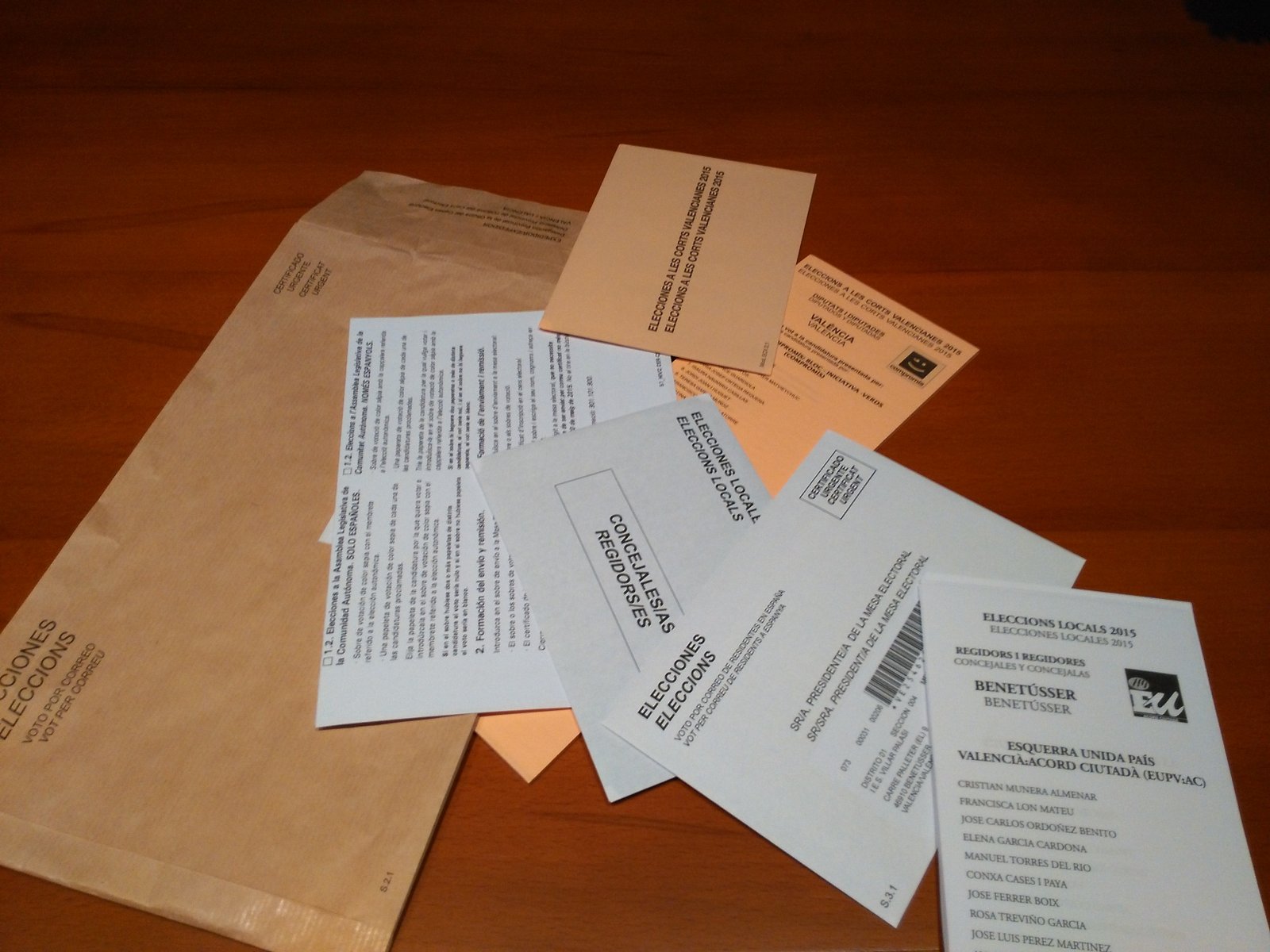
Óscar Puente tried to settle it on the radio: according to him, in fifty years of democracy, the overseas vote has never changed anything. There are five documented cases since 2008 that say exactly the opposite, in both Congress and the Senate, and benefiting different parties. How many seats can actually be moved is a separate question, and there is an official figure that measures it.
The minister's remark
The transport minister, Óscar Puente, appeared on Las Mañanas de RNE and summed up the record of the overseas vote this way.
If we look at the record of how the foreign vote has affected our elections, the conclusion is that in fifty years of democracy its impact has been zero. Óscar Puente, on Las Mañanas de RNE, as reported by Newtral's fact-check [1] (translated from the original Spanish)
Newtral's fact-check rates the claim misleading. Puente allowed for a single exception, 2023. The documented reversals number five, and the oldest dates to 2008.[1]
The five reversals
| Date | Constituency | Chamber | Reversal |
|---|---|---|---|
| Jul 2023 | Madrid | Congress | The PP takes a seat from the PSOE: 19,006 CERA votes against 10,411. The PSOE's appeal failed.[2] |
| Nov 2019 | Bizkaia | Congress | The PP takes a seat from the PNV by 126 votes.[3] |
| Nov 2019 | Valladolid | Senate | The PSOE takes a senate seat from the PP: 541 CERA votes against 297.[4] |
| Apr 2019 | Zamora | Senate | The PSOE wins the seat: 260 CERA votes against 212, having trailed by 18.[5] |
| Mar 2008 | El Hierro | Senate | Coalición Canaria wins the seat: 402 overseas votes against 91 for the PSOE, which had led by 132.[6] |
The five reversals do not all favour the same side. Two went to the PSOE, in Valladolid and Zamora; two to the PP, in Madrid and Bizkaia; and one to Coalición Canaria, in El Hierro. That is what Newtral's fact-check actually supports: beyond the 2023 case, the overseas count altered the outcome four more times since 2008, also in the PSOE's favour and not only the PP's. The mechanism has moved in both directions.[1]
The scale, with the official figure
That the CERA vote can move seats does not mean it moves many, and there is an official figure that bounds it. In the 2023 election the overseas roll had 2,327,388 electors and 233,688 voted, a turnout of 10.04% against 6.85% in 2019. The overseas count was expected to potentially alter the result in up to nine provinces. It altered one.[7]
As of 1 August 2026, the overseas roll for the 29 November election had 2,747,688 registered electors, of whom those affected by the injunction would number somewhere around 370,000–400,000. With turnout at 2023 levels, that works out to roughly 37,000 to 40,000 votes spread across fifty-two constituencies. That is an order-of-magnitude estimate, not a projection, but it frames the discussion better than the double-digit seat counts in circulation.[7]
What is actually in dispute is the scale, somewhere between one seat and a double-digit scenario. The possibility itself is documented five times over.
During those same weeks, Congress was working on the opposite of what Puente was arguing on air: giving the force of law to the very piece of the instruction the Supreme Court had just halted. The vehicle was an education bill.
References
- Newtral, "El voto CERA también modificó el resultado electoral en 2008 y 2019 pese a lo que dice Óscar Puente," 11 September 2026. newtral.es; the remark as broadcast on RNE: rtve.es (Las Mañanas de RNE) — the quotation comes from the fact-check, which places it at minute 20:30; the linked RTVE Play page does not record it in writing.
- RTVE, "El PP arrebata un escaño al PSOE en Madrid por el voto CERA," 29 July 2023. rtve.es. On the PSOE's appeal: Constitutional Court, Judgment 95/2023, of 12 September (electoral-protection appeal 5529-2023, brought by the PSOE of Madrid against the dismissal of its challenge to the proclamation of elected deputies; with a dissenting opinion), BOE-A-2023-21157 — this establishes that the appeal failed, not the CERA-vote reversal itself.
- RTVE, "El PNV pierde su último escaño en Bizkaia a favor del PP," 13 November 2019. rtve.es; eldiario.es (eldiario.es); Europa Press.
- eldiario.es, "El PSOE arrebata un senador al PP por Valladolid tras el recuento del voto en el extranjero, con dos para cada partido," 13 November 2019. eldiario.es; COPE, "El voto exterior da al PP un diputado que tenía el PNV y otro senador al PSOE," 13 November 2019. cope.es.
- COPE, "El PSOE arrebata a Barrios el puesto de senador" (Zamora), 1 May 2019. cope.es; Expansión, 1 May 2019.
- RTVE, "Coalición Canaria le arrebata al PSOE un senador gracias al voto del extranjero," 13 March 2008. rtve.es; Público.
- Ministry of Inclusion, Social Security and Migration / General Council of Spanish Citizenship Abroad, "El voto CERA altera en un escaño el recuento electoral de las elecciones generales" (2023 election figures: 2,327,388 CERA electors, 233,688 votes, 10.04%). inclusion.gob.es; CERA roll as of 1 August 2026 (2,747,688), Electoral Roll Office via Newtral, 5 October 2026 (newtral.es).
Numbered in order of first citation in the text. The five reversals rest on press coverage from the time. See also Sources.